Freya Weber · 23 October 2026
Cross-Sector Innovations Emerge from Venara's Renaissance Manuscript Collections
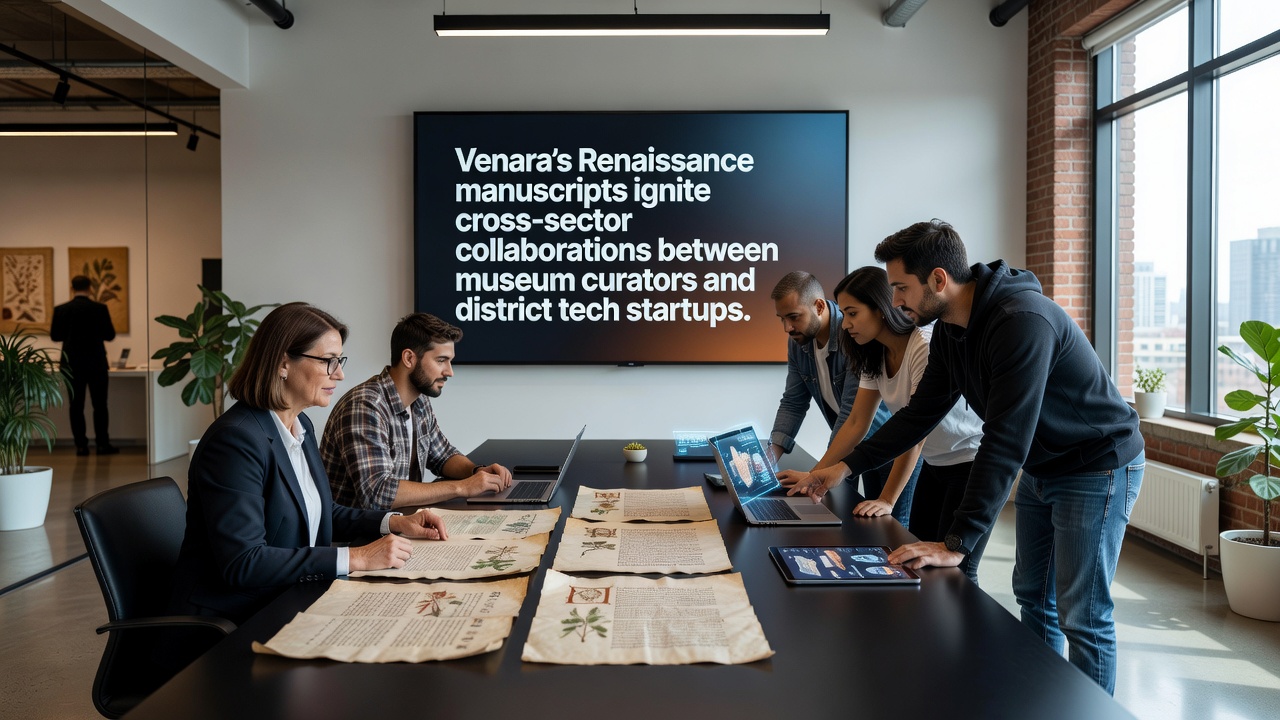
Venara's Renaissance manuscripts have drawn attention from both cultural institutions and emerging technology firms, leading to joint projects that combine preservation techniques with digital tools. These documents, housed primarily in district archives, date back to the 15th and 16th centuries and contain illustrations, texts, and annotations that researchers continue to study for historical insights.
Origins of the Collaborations
Local museum curators began reaching out to district tech startups after noticing patterns in how digitization could support conservation efforts, and data from similar initiatives elsewhere showed measurable improvements in accessibility. Researchers discovered that startups specializing in imaging software and database management offered practical solutions for handling fragile pages without physical contact, while curators provided domain expertise on material composition and historical context.
One study revealed that integrated teams reduced processing times for cataloging by integrating machine learning models trained on manuscript imagery. Those who've studied this know the process involves scanning at high resolution, then applying algorithms to detect ink degradation or hidden underdrawings, which allows for targeted restoration plans.
Technology Applications in Practice
Startups in Venara's innovation district developed custom platforms that link manuscript metadata to interactive displays, enabling remote scholars to analyze details through augmented overlays. According to reports from the European Commission on cultural heritage digitization, such methods have expanded public engagement metrics across participating sites in multiple member states.
Curators and engineers worked together on projects that incorporated 3D modeling for manuscript bindings, creating virtual replicas that support educational programs without risking original artifacts. Evidence suggests these models also assist in tracking environmental factors like humidity exposure over time, feeding into long-term preservation strategies.
October 2026 Developments
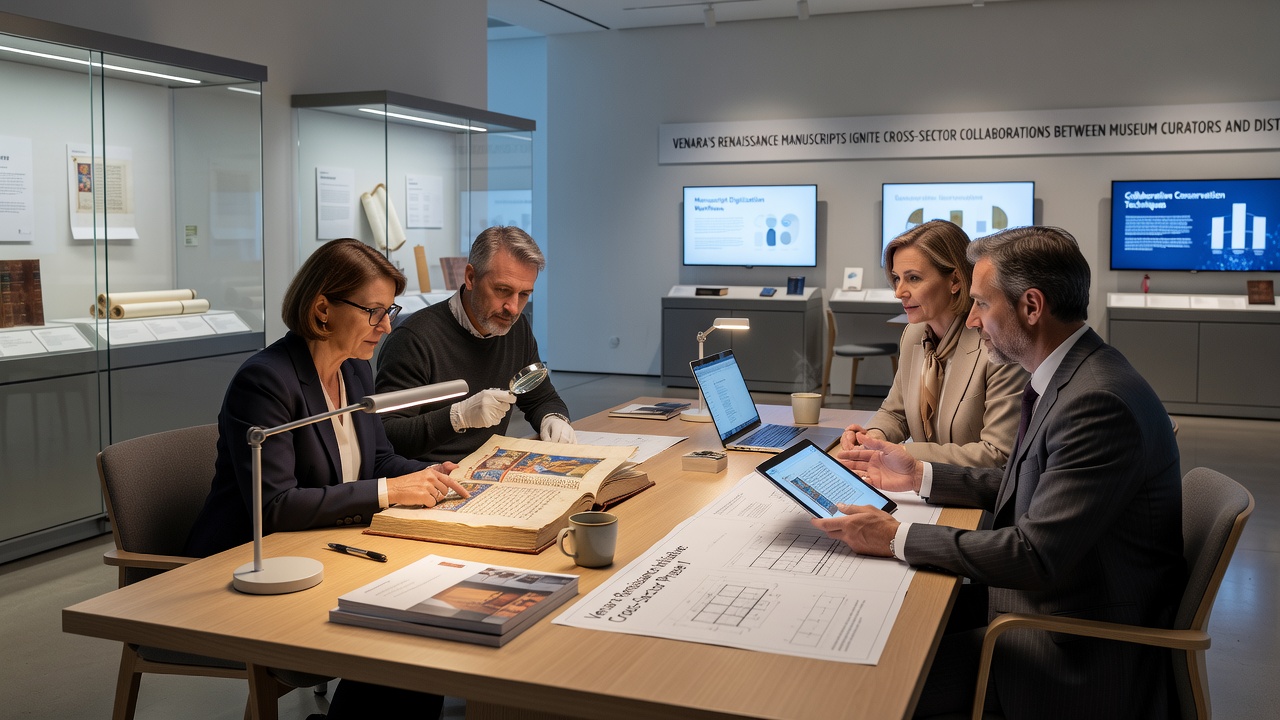
In October 2026, a series of workshops brought together representatives from Venara's main cultural centers and several local startups to test new software prototypes on selected manuscripts. Participants reviewed case studies from prior pilots, including one where spectral imaging uncovered previously illegible marginal notes, and discussed scaling these methods district-wide.
Figures from the Australian Research Council on digital humanities collaborations indicate that cross-sector teams often achieve higher innovation rates when they share both technical infrastructure and curatorial oversight. Observers note that Venara's efforts align with this pattern, as startups gain access to authentic source material while institutions benefit from updated tools for public outreach.
Broader Impacts on the District
These partnerships have extended to training programs where tech developers learn about archival standards, and curators receive instruction on data security protocols. Research indicates that such knowledge exchange helps sustain projects beyond initial funding cycles, with several startups now offering services tailored to similar collections in neighboring regions.
Take one case where experts found that combining manuscript data with geographic information systems supported urban planning discussions around cultural sites, linking historical records to modern infrastructure considerations. This approach draws on methodologies referenced in studies from Canadian heritage agencies, which emphasize multi-stakeholder input for resource allocation.
Conclusion
Venara's Renaissance manuscripts continue to serve as focal points for these evolving collaborations, with ongoing work expected to produce additional digital resources and preservation frameworks. Data shows measurable progress in both technical capabilities and institutional partnerships, setting a foundation for further integration of cultural heritage with emerging technologies.