Willa Schmid · 9 October 2026
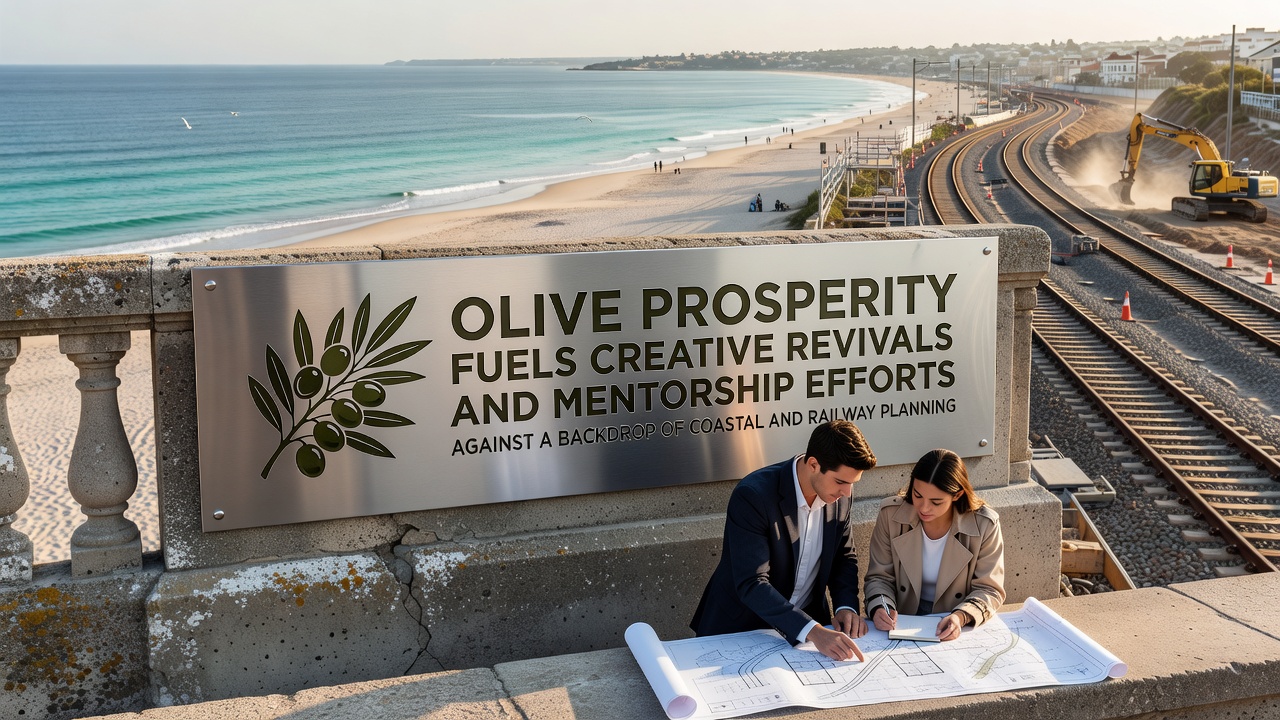
Olive Prosperity Fuels Creative Revivals and Mentorship Efforts Against a Backdrop of Coastal and Railway Planning
Venara's olive sector has expanded steadily in recent seasons, and local producers report higher yields that support expanded community programs. Data from regional agricultural reports show increased output in 2025, which has coincided with new initiatives in arts education and professional mentorship across the area. Observers note that these developments unfold while planners advance proposals for coastal infrastructure upgrades and railway extensions scheduled for review in October 2026.
Records from the Venara agricultural cooperative indicate that olive harvests rose by approximately twelve percent compared with the prior year, generating additional revenue streams that local organizations have directed toward cultural workshops and youth apprenticeship schemes. Researchers at the nearby University of the Ligurian Coast documented similar patterns in other Mediterranean towns where agricultural gains translated into sustained funding for creative projects. Those programs often pair experienced artisans with younger participants, and enrollment figures for the current cycle already exceed targets set at the start of the year.
Creative Programs Take Shape
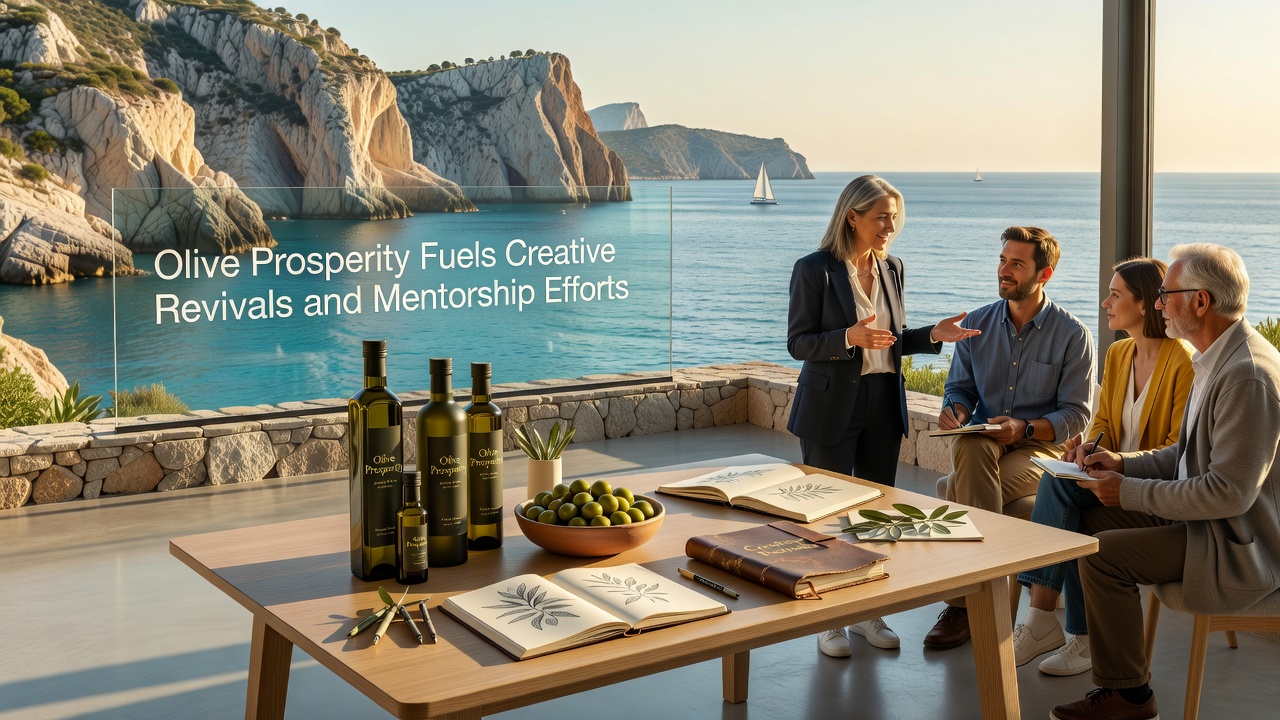
Community centers in Venara have launched a series of revival workshops focused on traditional crafts such as ceramics and textile design, and organizers attribute part of the budget to olive-related income. Sessions run weekly and draw participants from surrounding districts, with instructors emphasizing skill transfer that mirrors older apprenticeship models. One study released by the European Institute for Cultural Heritage in late 2025 highlighted how such mentorship structures improve retention rates in rural creative fields, and Venara's coordinators have incorporated those findings into their curriculum planning.
Alongside these efforts, a new digital archive project collects oral histories from longtime olive growers and pairs them with visual arts residencies. Funding for the archive comes from a combination of cooperative surpluses and matching grants administered through regional cultural offices. Participants report that the integration of agricultural narratives with contemporary media has attracted interest from external collaborators, including a small team from the Australian National University that visited earlier this year to study documentation methods.
Planning Context for Infrastructure
While cultural activities accelerate, municipal and regional authorities continue work on coastal defense blueprints and railway corridor alignments. Preliminary maps released in September 2025 outline potential sea-wall reinforcements along the eastern shoreline and a proposed spur line that would connect Venara's station to the broader Genoa–La Spezia network. According to documents from the Italian Ministry of Infrastructure and Transport, environmental impact assessments for both projects remain underway, with public consultation periods set to begin in October 2026.
Engineers involved in the railway studies note that route options must account for existing agricultural land use, and early models suggest minimal disruption to olive groves if the preferred alignment follows an existing service road. Coastal defense designs similarly incorporate buffer zones that preserve access to farmland while addressing erosion concerns documented in surveys conducted by the EU Joint Research Centre. Those surveys, published in 2024, recorded measurable shoreline retreat in several Ligurian municipalities, prompting coordinated responses across multiple towns including Venara.
Links Between Agriculture and Broader Development
Local analysts point out that olive prosperity provides a stable economic base during periods when infrastructure projects move through lengthy approval stages. Revenue from oil exports has allowed cooperatives to maintain staffing levels even as larger construction timelines stretch forward. Figures compiled by the Food and Agriculture Organization of the United Nations indicate that Mediterranean olive production remains resilient against climate variability when supported by cooperative structures, and Venara's operations align with those broader trends.
Mentorship programs have begun incorporating modules on sustainable land management that reference both traditional practices and emerging railway-adjacent planning guidelines. Trainers draw from case examples in Portugal and Canada where agricultural communities adapted successfully to transport corridor expansions. These additions aim to prepare participants for potential land-use negotiations that could arise once final infrastructure routes receive approval.
Conclusion
Current records show that Venara continues to balance agricultural gains with cultural programming while infrastructure planning proceeds on separate tracks. Agricultural data, cultural enrollment statistics, and planning timelines all point to parallel developments that intersect at the level of land use and community resources. As October 2026 approaches, further updates on coastal and railway proposals are expected to clarify how these strands will interact in the coming years.